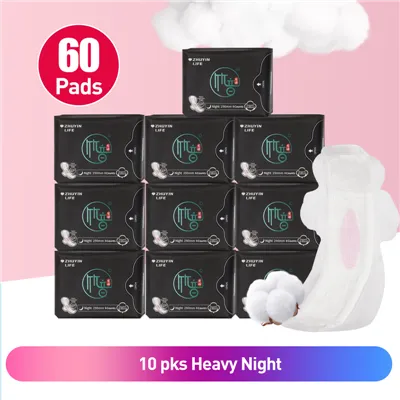
Super absorbency pads are a cornerstone in the menstrual care industry, offering reliable protection for women during their periods. As a leading supplier of these essential products, we're often asked about their performance in diverse environmental conditions. One such condition that raises questions is cold weather. In this blog post, we'll delve into how super absorbency pads perform when the mercury drops, providing you with scientific insights and practical information.
Understanding the Basics of Super Absorbency Pads
Before we discuss cold - weather performance, let's briefly review how super absorbency pads work. These pads are designed with advanced absorbent materials, such as super absorbent polymers (SAPs). SAPs are tiny, granular substances that can absorb and retain large amounts of liquid relative to their own weight. When menstrual fluid comes into contact with the pad, the SAPs swell as they soak up the liquid, creating a gel - like substance that locks the fluid away, preventing leaks and keeping the user dry.
Effects of Cold Weather on Pad Materials
SAPs in Cold Weather
The primary concern in cold weather is how the super absorbent polymers behave. SAPs are hydrophilic, meaning they have a strong affinity for water. However, in cold temperatures, the molecular activity of these polymers slows down. The cold can cause the SAPs to absorb liquid at a slower rate. When the menstrual fluid first hits the pad, it may take a bit longer for the SAPs to start swelling and absorbing the liquid compared to normal room temperature conditions.
This slower absorption rate doesn't mean that the pads won't work well. In most cases, the pads will still be able to absorb the menstrual fluid, but there could be a small delay. For example, if a woman experiences a sudden heavy flow, it might take an extra few seconds for the pad to lock away all the fluid. But the overall absorbency capacity of the SAPs remains relatively stable in cold weather. Studies have shown that SAPs can still absorb a significant amount of liquid, even at temperatures close to freezing.
Fiber and Non - woven Layers
In addition to SAPs, super absorbency pads also have other layers, such as non - woven covers and fluff pulp. These materials can be affected by cold weather as well. Non - woven fabrics can become stiffer in cold temperatures, which might slightly alter their texture next to the skin. However, modern super absorbency pads are engineered to have a certain level of flexibility, even in cold conditions.
The fluff pulp, which helps distribute the liquid evenly across the pad, retains its function in cold weather. Although the cold can make it more rigid, it still effectively spreads the menstrual fluid to the areas where the SAPs are concentrated, facilitating absorption.
Performance in Daily Use During Cold Weather
Let's consider how these changes in material properties translate into real - world use. In normal daily activities where the flow is relatively steady, the slightly slower absorption rate due to cold weather may not be noticeable. Women can go about their day with the same confidence as they would in warmer temperatures.
However, in certain situations, the impact of cold weather on pad performance can be more apparent. For example, during outdoor winter sports like skiing or ice skating. In these high - activity scenarios, there is often a combination of cold temperatures and increased movement. The movement can cause the menstrual fluid to be distributed differently on the pad, and the cold can slow down the absorption process. This might increase the risk of leaks if the woman has a heavy flow.
To mitigate these risks, it's advisable for women to change their pads more frequently during cold - weather outdoor activities. Also, choosing a higher - capacity Super Absorbency Pads can provide an extra margin of safety.
Different Types of Super Absorbency Pads in Cold Weather
Our product line includes a variety of super absorbency pads to meet different needs. The 80 Counts Menstrual Pads offer convenience and long - term supply. These pads have a well - balanced design of SAPs and other absorbent layers. In cold weather, they perform similarly to other pads, with the potential for a slightly slower initial absorption rate.
For those with sensitive skin, our Pads for Sensitive Skin are a great option. Although the cold can make the non - woven cover stiffer, these pads are made with gentle materials that are less likely to cause irritation, even in cold conditions. The SAPs in these pads also work effectively to absorb menstrual fluid, providing reliable protection.
Testing and Quality Assurance
As a dedicated supplier, we conduct rigorous testing to ensure that our super absorbency pads perform well in various conditions, including cold weather. Our testing facilities simulate different temperature and humidity levels to evaluate the absorption rate, capacity, and leakage prevention of the pads.
We also collect feedback from users who have used our pads in cold - weather environments. This real - world data helps us continuously improve our products and make any necessary adjustments to enhance their performance in cold weather.
Conclusion
In conclusion, super absorbency pads can still provide reliable protection during cold weather. While cold temperatures can cause a slight slowdown in the absorption rate of SAPs and make some of the pad materials stiffer, the overall functionality of the pads remains intact. With proper usage, such as more frequent pad changes during high - activity cold - weather situations, women can rely on our pads for a comfortable and leak - free period.
If you're a retailer or distributor interested in stocking our high - quality super absorbency pads, we're eager to discuss potential partnerships. Our products are backed by extensive research and testing, ensuring that they meet the highest standards of performance, even in challenging environmental conditions. Contact us to start a conversation about procurement and find out how we can meet your business needs.


References
- "The Science of Super Absorbent Polymers in Hygiene Products" - Journal of Hygiene Science
- "Performance Evaluation of Menstrual Pads in Different Environmental Conditions" - International Journal of Women's Health